Received a copy of How Some People Like Their Eggs by Sean Lovelace for Christmas. A truly thoughtful gift! I can't recommend it highly enough. Especially the title story, which, appropriately, and amusingly, and beautifully, details how some people like their eggs. General Patton, in particular, delighted me.
It's not an easy thing, being able to transplant yourself so readily into another's skin, even for a paragraph. I had no doubt I was inside Patton's mind. Or at least the caricature of Patton's mind. I read this passage aloud to people who will sit still long enough to be enraptured. If they fail to be enraptured, they are clods and I have no use for them. It is cruel, but life is cruel. Buy this book.
By the way, Happy New Year. And Merry Christmas. And Happy Thanksgiving. And Happy Halloween. And Happy Birthday to: Monica Bellucci; Mark Hamill; Xzibit; Evan Rachel Wood; myself.
Thursday, January 6, 2011


Tuesday, September 28, 2010
Thursday, August 5, 2010
Transubstantiate, epilogue.
Finished up Richard Thomas' Transubstantiate recently-- my review is up over @ Oxyfication.
The book was a great time. Very fast, very kinetic, very bloody, very noir. It's a testament to his skill that the book is as easy to read as it is, because the structure is actually quite complicated. It's a shadowy journey, and while Richard holds his mysteries quite close to the vest, you're never lost. A dark, devilish tale.
Thursday, July 1, 2010

Tuesday, June 29, 2010
Transubstantiate -- right around the corner.
Transubstantiate, the neo-noir debut from Richard Thomas, is almost here. Two days. My copy's ordered; is yours? Visit his blog, What Does Not Kill Me, or the Transubstantiate home page for all the juicy details. More to come!
Friday, June 18, 2010
Jose Saramago.
Farewell to the great Jose Saramago, who has passed away. "Blindness" is by far one of my favorite books, and a great example of uncompromising style. The same way "A Clockwork Orange" conditions you to learn a new language, "Blindness" conditions you to read in a new way-- your trusted senses are discarded as you encounter blocks of unattributed text, text without punctuation, etc. All signposts have been removed, yet you still find your way. Eventually, you come to trust your instincts. It is an amazing experience.
It's tough to lose someone you admire. These people become like family members in a way. It can be tough to take, but we are lucky enough to have their body of work to treasure, and to pass on to future generations. Incomplete as it always seems to feel.
Thursday, June 3, 2010
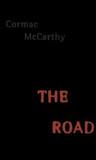
The Road.
About a hundred pages in to Cormac's "The Road." I have been warned there is no light at the end of this drab tunnel. Though I wonder. My idea of redemption is that it is so miniscule, dirt-smeared and fragile that I may well find it where it does not exist, whenever I choose to find it. This is the "buried gun" approach to redemption: when you feel the misery is endless and you can't persist, just find the spot where you buried your salvation, and be saved. (Is salvation, then, a gun? Is salvation suicide? Oh, bleak world. There are already rumblings of suicide in the text. It's out there unseen, like the strange, far-off concussions the man and woman heard in the night. The notion of release from torment.)
It doesn't concern me either way, though, as I find there is something uplifting about misery that dares to be interminable. It allows you to be the author of your own philosophy, as opposed to being fed someone else's. That's what I've always enjoyed about McCarthy-- he doesn't force feed you anything. He gives you not necessarily the world as it is, but a brutal magnification that tests you. The idea of being tested-- being given a task-- is perhaps hinted at in the book's title-- the idea of being unmoored, and set on your way to discover if you're made of anything, or if you're destined to be nothing but a pile ash.
Subscribe to:
Posts (Atom)