Tuesday, June 29, 2010
Transubstantiate -- right around the corner.
Transubstantiate, the neo-noir debut from Richard Thomas, is almost here. Two days. My copy's ordered; is yours? Visit his blog, What Does Not Kill Me, or the Transubstantiate home page for all the juicy details. More to come!


Friday, June 18, 2010
Jose Saramago.
Farewell to the great Jose Saramago, who has passed away. "Blindness" is by far one of my favorite books, and a great example of uncompromising style. The same way "A Clockwork Orange" conditions you to learn a new language, "Blindness" conditions you to read in a new way-- your trusted senses are discarded as you encounter blocks of unattributed text, text without punctuation, etc. All signposts have been removed, yet you still find your way. Eventually, you come to trust your instincts. It is an amazing experience.
It's tough to lose someone you admire. These people become like family members in a way. It can be tough to take, but we are lucky enough to have their body of work to treasure, and to pass on to future generations. Incomplete as it always seems to feel.
It's tough to lose someone you admire. These people become like family members in a way. It can be tough to take, but we are lucky enough to have their body of work to treasure, and to pass on to future generations. Incomplete as it always seems to feel.
Thursday, June 3, 2010
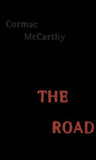
The Road.
About a hundred pages in to Cormac's "The Road." I have been warned there is no light at the end of this drab tunnel. Though I wonder. My idea of redemption is that it is so miniscule, dirt-smeared and fragile that I may well find it where it does not exist, whenever I choose to find it. This is the "buried gun" approach to redemption: when you feel the misery is endless and you can't persist, just find the spot where you buried your salvation, and be saved. (Is salvation, then, a gun? Is salvation suicide? Oh, bleak world. There are already rumblings of suicide in the text. It's out there unseen, like the strange, far-off concussions the man and woman heard in the night. The notion of release from torment.)
It doesn't concern me either way, though, as I find there is something uplifting about misery that dares to be interminable. It allows you to be the author of your own philosophy, as opposed to being fed someone else's. That's what I've always enjoyed about McCarthy-- he doesn't force feed you anything. He gives you not necessarily the world as it is, but a brutal magnification that tests you. The idea of being tested-- being given a task-- is perhaps hinted at in the book's title-- the idea of being unmoored, and set on your way to discover if you're made of anything, or if you're destined to be nothing but a pile ash.
It doesn't concern me either way, though, as I find there is something uplifting about misery that dares to be interminable. It allows you to be the author of your own philosophy, as opposed to being fed someone else's. That's what I've always enjoyed about McCarthy-- he doesn't force feed you anything. He gives you not necessarily the world as it is, but a brutal magnification that tests you. The idea of being tested-- being given a task-- is perhaps hinted at in the book's title-- the idea of being unmoored, and set on your way to discover if you're made of anything, or if you're destined to be nothing but a pile ash.
Tuesday, May 25, 2010
LOST (spoilers).
So-- LOST is done.
I was a late arrival to the party, watching seasons 1 - 5 on Netflix streaming this past winter, and much of season 6 on Hulu. I watched the finale as it aired on ABC, commandeering my parents' living room for four and a half hours, since I do not get cable at my house. I've found my tolerance for commercial breaks has dropped to nearly zero.
So, by gorging myself all at once I was able to devour the series in ravenous chunks, not having to endure the incubation periods of days and weeks in between mysteries during which a traditional viewer might hatch his hairbrained theories as to what was actually going on on the island. I don't know if this was beneficial or not; I don't have a frame of reference. I do know that I enjoyed seasons 1 - 5 immensely, and was sad to see it all come to an end.
My thoughts on that ending: I was not disappointed. The series was built on mystery, and many of those mysteries remained intact, if a little jumbled. When the writers made attempts to reward the viewers' tenacity and explain certain things, the show tended to suffer from it. It's rarely as fun to know as it is to guess.
Some of the finale felt a bit rushed. Locke's recovery for example, though I suppose you could attribute this to the uncertain physics of Limbo. Emotionally, however, I felt the need to see Locke's faith somehow redeemed in the real world; he was a long-suffering character, broken like the rest, but I felt that despite his talk of being special and having a purpose, Locke's role was simply to be used. As he was murdered a few seasons back, for example, Locke's last thoughts were, "I don't understand."
Overall, a series finale is a bit perfunctory in nature. If it entertains and keeps the spirit of the show alive, I think it has done its job. I was happy to have been given a chance to see these characters on their way.
Jack's end was poetic and heartfelt, if a little lonely. I was satisfied with his having to die alone, in that the character had learned to let go-- much of the show was concerned with inherent flaws; the "clean slate" the characters were given in the first season was an illusion. No one can leave his past behind. In fact, Jack found that out shortly after he'd said it as he found himself chasing his dead father through the jungle. That he eventually learned to accept that whatever happened happened and move on was fitting.
Still, the overall philosophy of the show was often difficult to pin down, but considering the ways that Jack and Locke ultimately left the earthly realm, the show's final message struck me as surprisingly bold in its fatalism. I would be tempted to say that this was kind of an exasperated, nuclear reset of the show's themes-- a result of the writers' inability to wrangle the myriad of philosophies, plot points, and themes they had introduced; tempted, if it weren't for the fact that this was so personally satisfying to me. As a whole, the final vision of the show is of an ultimately unknowable world and a character's subsequent passing from it. Pieces can be discovered, but how often do we understand the full scope of things? How often do you get to rest? There is always one more thing, one more thing, one more thing, until you're dead. I find this to be rather sublime. Rose and Bernard's continued existence in the story is the only clue that this was intentional; they had let go of it all a long, long time ago, and their lives looked pretty good to me. Someone who might find Jack's lonely Zen to be unfitting is probably the type that still identifies with Locke's restless hunger in earlier seasons. I was one; but when I realized what it earned him, I suppose I started to drift. Locke was no more enlightened than Jack.
I am not naive enough to believe that all the show's unanswered questions were left unanswered on purpose. Part of this adventure was sleight of hand. Some of the fun of writing is retrofitting the mess you've made with themes that develop naturally from your interests, your values, and your sensibilities. That certain mysteries of the island were never "solved" is probably more a function of the show's simply reaching its end before the writers were forced to deal with loose ends. Not a problem, as far as I'm concerned. The mysteries of the island-- striking as many of them were-- were often placed as secondary. Earlier, anyway. Later, it became necessary to try and strike a better balance. Things then tipped in the other direction for a while, and the island and its mythology took center stage. I think the back-and-forth is a good representation of what people go through in their lives: too often we're swallowed by the details of our maddening world. Rarely can we escape.
I am sad to see such an ambitious show come to an end. It didn't always hit its mark, but I am glad to have taken the trip.
I was a late arrival to the party, watching seasons 1 - 5 on Netflix streaming this past winter, and much of season 6 on Hulu. I watched the finale as it aired on ABC, commandeering my parents' living room for four and a half hours, since I do not get cable at my house. I've found my tolerance for commercial breaks has dropped to nearly zero.
So, by gorging myself all at once I was able to devour the series in ravenous chunks, not having to endure the incubation periods of days and weeks in between mysteries during which a traditional viewer might hatch his hairbrained theories as to what was actually going on on the island. I don't know if this was beneficial or not; I don't have a frame of reference. I do know that I enjoyed seasons 1 - 5 immensely, and was sad to see it all come to an end.
My thoughts on that ending: I was not disappointed. The series was built on mystery, and many of those mysteries remained intact, if a little jumbled. When the writers made attempts to reward the viewers' tenacity and explain certain things, the show tended to suffer from it. It's rarely as fun to know as it is to guess.
Some of the finale felt a bit rushed. Locke's recovery for example, though I suppose you could attribute this to the uncertain physics of Limbo. Emotionally, however, I felt the need to see Locke's faith somehow redeemed in the real world; he was a long-suffering character, broken like the rest, but I felt that despite his talk of being special and having a purpose, Locke's role was simply to be used. As he was murdered a few seasons back, for example, Locke's last thoughts were, "I don't understand."
Overall, a series finale is a bit perfunctory in nature. If it entertains and keeps the spirit of the show alive, I think it has done its job. I was happy to have been given a chance to see these characters on their way.
Jack's end was poetic and heartfelt, if a little lonely. I was satisfied with his having to die alone, in that the character had learned to let go-- much of the show was concerned with inherent flaws; the "clean slate" the characters were given in the first season was an illusion. No one can leave his past behind. In fact, Jack found that out shortly after he'd said it as he found himself chasing his dead father through the jungle. That he eventually learned to accept that whatever happened happened and move on was fitting.
Still, the overall philosophy of the show was often difficult to pin down, but considering the ways that Jack and Locke ultimately left the earthly realm, the show's final message struck me as surprisingly bold in its fatalism. I would be tempted to say that this was kind of an exasperated, nuclear reset of the show's themes-- a result of the writers' inability to wrangle the myriad of philosophies, plot points, and themes they had introduced; tempted, if it weren't for the fact that this was so personally satisfying to me. As a whole, the final vision of the show is of an ultimately unknowable world and a character's subsequent passing from it. Pieces can be discovered, but how often do we understand the full scope of things? How often do you get to rest? There is always one more thing, one more thing, one more thing, until you're dead. I find this to be rather sublime. Rose and Bernard's continued existence in the story is the only clue that this was intentional; they had let go of it all a long, long time ago, and their lives looked pretty good to me. Someone who might find Jack's lonely Zen to be unfitting is probably the type that still identifies with Locke's restless hunger in earlier seasons. I was one; but when I realized what it earned him, I suppose I started to drift. Locke was no more enlightened than Jack.
I am not naive enough to believe that all the show's unanswered questions were left unanswered on purpose. Part of this adventure was sleight of hand. Some of the fun of writing is retrofitting the mess you've made with themes that develop naturally from your interests, your values, and your sensibilities. That certain mysteries of the island were never "solved" is probably more a function of the show's simply reaching its end before the writers were forced to deal with loose ends. Not a problem, as far as I'm concerned. The mysteries of the island-- striking as many of them were-- were often placed as secondary. Earlier, anyway. Later, it became necessary to try and strike a better balance. Things then tipped in the other direction for a while, and the island and its mythology took center stage. I think the back-and-forth is a good representation of what people go through in their lives: too often we're swallowed by the details of our maddening world. Rarely can we escape.
I am sad to see such an ambitious show come to an end. It didn't always hit its mark, but I am glad to have taken the trip.
Friday, April 30, 2010
Click.
Read this some time ago, but it's always worth mentioning, since Another Sky Press does good things: Click. It's by Kristopher Young. A total brainfuck, this one. You'll love it. And you can read it online. No, really. You can. But buy the manuscript too. Because anyone can float pixels, but a thing on paper is a thing with weight, both literally and even spiritually. I cannot explain the universe; I only receive mail there. Enjoy!
Thursday, April 22, 2010
The Grifted.
I can't remember the source-- someone on Facebook posted a link to this story @ The Collagist (I'm thinking it was either Richard Thomas or Christopher Dwyer, though I could be wrong). The story's called The Grifted by Jac Jemc, and it's a cool, cryptic, noir-ish tale. One interpretation is that the narrator is passing into a none-too-cozy afterlife; another interpretation is that there is no interpretation-- only the reality, and whatever you bring to the table. The compelling oddness of the story naturally makes people want to "figure it out." It's likely there is a a "true" interpretation of the story. It also doesn't matter in the slightest. This phenomenon of plasticity reminds me of the films of David Lynch (in general); furthermore, it reminds me of David Lynch the personality-- or, more specifically, facets of his personality in terms of the meta-marketing campaign he launched with the release of his film Inland Empire. That whole bit with the cow.
For those unfamiliar with David Lynch's cow, here's a brief explanation (credited to Joshy Tyler, 2006):
Yeah. So. There's David Lynch and his cow. The whole non-sequitur about the cheese might strike you as a kind of a toss-away eccentricity (it sort of is), but to me it speaks of the way that language has a lot of ground to cover in conveying complex thoughts or ideas; to me, he's atttempting to convey several things at once: first, that A) cheese made him happy; B) happiness is a sort of transitory, simple thing, sometimes as simple as a taste-- a kind of butterfly of an emotion, landing here, landing there; C) the nested idea that his conveying of the above sentiments in connection with the promotion of his film is an attempt to convey both the simplicity of such a chance pleasure (the eating of cheese) and the fact that that pleasure is, in all reality, completely unrelated to the film itself, thereby implying that the relationship between the cow and the promotion of Inland Empire is just as valid as Lynch's enjoyment of cheese in concert with the filming of his latest movie. He's an alchemist, trying to conjure depth from disharmony.
Why all this talk of cheese and David Lynch's cow? Someone has to talk about it. But aside from that, I see parallels between Lynch's cunning oddness and Jemc's story. I'm no David Lynch expert. I like the man's films, but I don't know much about him as a person outside the context of his work. I don't know what it says about me that I find his concept of marketing his films with a cow in tow to be somehow completely sensible in terms of the human experience of creating art, but I get a similar sensation in reading Jac Jemc's story The Grifted. Sometimes, people try to apply sense where there is no call for sense: only feeling.
For those unfamiliar with David Lynch's cow, here's a brief explanation (credited to Joshy Tyler, 2006):
Apparently bovines are [Lynch's] new method of self-distributing his films. The Mullholland Drive director tells The Hollywood Reporter he's sick of studios and will now distribute his movies himself. To do it, he'll embark on a ten city tour to promote [Inland Empire], using only cattle and a folding chair. "I ate a lot of cheese during the film, and it made me happy," he explains. "I'm hoping the Academy members will be sick of 10 million trade ads and appreciate something a bit different." Cows are certainly different. I'll give him that. Accompanying Lynch and his moo-buddy will be Pianist Mark Zebrowski, who will play "Polish night music" from Inland Empire.
Yeah. So. There's David Lynch and his cow. The whole non-sequitur about the cheese might strike you as a kind of a toss-away eccentricity (it sort of is), but to me it speaks of the way that language has a lot of ground to cover in conveying complex thoughts or ideas; to me, he's atttempting to convey several things at once: first, that A) cheese made him happy; B) happiness is a sort of transitory, simple thing, sometimes as simple as a taste-- a kind of butterfly of an emotion, landing here, landing there; C) the nested idea that his conveying of the above sentiments in connection with the promotion of his film is an attempt to convey both the simplicity of such a chance pleasure (the eating of cheese) and the fact that that pleasure is, in all reality, completely unrelated to the film itself, thereby implying that the relationship between the cow and the promotion of Inland Empire is just as valid as Lynch's enjoyment of cheese in concert with the filming of his latest movie. He's an alchemist, trying to conjure depth from disharmony.
Why all this talk of cheese and David Lynch's cow? Someone has to talk about it. But aside from that, I see parallels between Lynch's cunning oddness and Jemc's story. I'm no David Lynch expert. I like the man's films, but I don't know much about him as a person outside the context of his work. I don't know what it says about me that I find his concept of marketing his films with a cow in tow to be somehow completely sensible in terms of the human experience of creating art, but I get a similar sensation in reading Jac Jemc's story The Grifted. Sometimes, people try to apply sense where there is no call for sense: only feeling.
Monday, April 19, 2010
Ubik.
So, finished Ubik-- interesting. Odd book. Always nice to experience a quick read. I hadn't reading anything by Philip K. Dick before, and I guess from having seen a few movies based on his work I expected something more dystopian. I mean, there were certainly elements of it (the largely coin-operated society, the semi-conscious dead having their identities mingled in half-life moratoriums), but those elements seemed to take a back seat to a sort of odd procedural, not unlike the process by which one accepts death-- there is the incident, then the sense of futility, then a blossoming understanding as one comes to terms with a new reality. The nature of half-life in the story proposed an interesting twist-- that we not only have to accept and experience the deaths of loved ones, but we must make similar sense of our own deaths as well. In real time, no less. There is also an element of rebirth. One is forced to wonder if this is a hint at infinity; if death, death again, and rebirth are accepted facts, why fear anything that happens?
The final ten or twenty pages are excellent. Cryptic non-ending that erases all solid ground. In fact, on second thought, there is not a safe place to stand during this whole story. The final suggestion is one of endlessly nested realities; one wonders if these are nothing but the catacombs of the half-dead mind.
The final ten or twenty pages are excellent. Cryptic non-ending that erases all solid ground. In fact, on second thought, there is not a safe place to stand during this whole story. The final suggestion is one of endlessly nested realities; one wonders if these are nothing but the catacombs of the half-dead mind.
Subscribe to:
Posts (Atom)