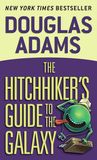
So, I am thigh deep in this monstrous collection of Nabokov's stories. I had read "Despair" somewhere in a previous life, and had enjoyed it well enough to never read Nabokov again. This is not mean as a criticism-- I used to be something of a masochist when it came to reading, in that, if I found something I liked, I generally read nothing else from that author. The exceptions were Douglas Adams and Chuck Palahniuk; the former because Adams's work was a childhood friend to me (and a grown-up friend as well, which is a rare treat-- I was disappointed to find that He-Man did not age as well as "The Hitchhiker's Guide to the Galaxy"); the latter, because I went to college during the Age of Palahniuk, and if you weren't reading Palahniuk you weren't cool. And let me tell you: I was cool with a capital "K." (As a side note, I bet you're wondering if Nabokov relates to He-Man in any meaningful way; you will be pleased to know he does, and the matter will be addressed with bracing insight in my completely fictional doctoral thesis, "Nabokov, He-Man, and Yevtushenko's So-Called Clatter of Surgical Tools: Manhood and the Aesthetic Structure in Modern Media.")
But anyway again. These short stories are brutally weighty and depressing. Weighty in an existential way; depressing in a good way. "Terra Incognita" is my favorite so far-- the story of a doomed jungle expedition and the associated abandonments, violence, and illness. There are some fun games here with perception and ontology, if one knew what that word meant, and had subsequently used it properly. Nabokov only needs about five pages to destroy you. It's a subdued, lyrical destruction though-- a lovely autopsy of reality. The knife in this story does not rip or tear or any of that. It is a rusty blade that enters unseen and by the time you register it, it's done with.
What happens in the story? Everyone dies. I hope I'm not ruining it for you. Let me, in fact, ruin all of Nabokov's short fiction for you: everyone dies. That's not literally true of course-- some people improbably survive-- but it might as well be. Death is the overarching detail that seems to float to the surface in the 30 or so stories I've read so far. Oh, a more critical and worthy eye would find a myriad of more fascinating themes and parallels, but I am not reading this to dissect it so much as enjoy it (Nabokov himself would've been a fan of this approach). I haven't read enough (read: any other) Russian literature so as to be able to say "It's very Russian" without being supercilious, but what the hell-- life's short and you probably know what I mean anyway. This is very Russian. Blammo. Checkmate.
I've been reading the stories here and there over a period of months, and have just about hit the halfway mark. I've been reading as the opportunities arise-- in the bathroom, while waiting to have my teeth cleaned, sitting at the local Subway on my lunch hour-- and am further convinced that the short story is my favorite form. Novels are great; but this is a 65-course meal.
EDIT: "Perfection" is now possibly my favorite story so far. If you happen to read the story, and want to gallop farther along the Reading Rainbow, here's a nice critical breakdown:
Behind the Glass Pane: Vladimir Nabokov’s “Perfection” and Transcendence
DOUBLE EDIT: Only read this comment if you've read the story so I don't ruin it for you. Waiting...waiting for you to finish the story...still waiting...still waiting...still waiting...still waiting...still waiting...still waiting...still waiting...still waiting...still waiting...still waiting...still waiting...still waiting...done? Okay, so what did I tell you before? The guy dies. Everyone dies.
Friday, September 30, 2011


Friday, August 5, 2011
So Long, Abjective.
Since the kiddies may be reading, I'll keep this clean: shitballs. Abjective is done publishing. I am very sad to see it go, though I hope the circumstances were benign-- i.e. there was no massive fire, or website foreclosure, or abduction, etc. Lots of amazing fiction came and went over in those parts.
Went-- no, that's the wrong word. It implies that the fiction is gone-- it remains! Explore the archive:
Abjective.
Thanks for the memories.
Went-- no, that's the wrong word. It implies that the fiction is gone-- it remains! Explore the archive:
Abjective.
Thanks for the memories.
Tuesday, April 26, 2011
BULL!
What do you think of when you think of independent men's fiction? Dockers(r) brand pants, of course.
There's this thing where, if you have a Facebook account, you can vote for indie publisher BULL (fiction for thinking men). If they win, they get some bank. $100K of bank. That's a lot of bank.
Anyway, in order to do this, you have to first "Like" Dockers(r) brand pants. Don't worry, it's all there in the below link. I know, it's a total pain in the ass, but this is what we've done to our planet and so now we have to make do by indirectly selling one another pants. It may leave a nasty taste in your mouth to tangentially become a marketing pawn, but, since I assume BULL will not be devoted (solely) to pants-adoring literature, I think it's a worthy bit of pride swallowing.
Anyway, give BULL a hell of a nice start and vote for their plan here: http://apps.facebook.com/dockerswearthepants/entries/21891.
Vote once a day, every day. If you love pants like I do you'll do it.
There's this thing where, if you have a Facebook account, you can vote for indie publisher BULL (fiction for thinking men). If they win, they get some bank. $100K of bank. That's a lot of bank.
Anyway, in order to do this, you have to first "Like" Dockers(r) brand pants. Don't worry, it's all there in the below link. I know, it's a total pain in the ass, but this is what we've done to our planet and so now we have to make do by indirectly selling one another pants. It may leave a nasty taste in your mouth to tangentially become a marketing pawn, but, since I assume BULL will not be devoted (solely) to pants-adoring literature, I think it's a worthy bit of pride swallowing.
Anyway, give BULL a hell of a nice start and vote for their plan here: http://apps.facebook.com/dockerswearthepants/entries/21891.
Vote once a day, every day. If you love pants like I do you'll do it.
Closed Garage Door.
I love this: Closed Garage Door by Allison Carter. It's at 5_Trope.
Am I supposed to use the underscore? I'd hate to look the fool.
Am I supposed to use the underscore? I'd hate to look the fool.
Friday, April 8, 2011
Inherent Vice.
I've read some Pynchon in the past-- some, meaning:
1) I have opened "Gravity's Rainbow" approximately three times while sitting on the toilet, read three sentences per visit, and decided that this was obscenely optimistic bathroom reading
2) "Slow Learner."
3) "V." Though to be honest I don't think I finished it. In college I was terrible about abandoning books halfway through
This book is less Pynchon-y than any of those, though it's still crammed with characters who sometimes seem to exist chiefly to be branded with a kooky name (Jason Velveeta) and then disappear. I haven't finished the book yet-- about 60 pages left-- but, if all these characters intend to return, the final pages are going to be like watching an extravagance of weirdos and paranoiacs endlessly disembarking a clown car.
I'm not a huge fan of noir, and a first-timer to hippie noir, if that's even a recognizable genre, but this book-- for all its weirdness and whimsy-- has actually been quite a bit of fun so far. If you can tolerate an eccentric dentist/suspected ne'er-do-well operating from inside a building shaped like a giant golden tooth and later suffering a serious accident on a trampoline, last seen in the presence of a car full of potheads driven by a-- okay, so that's what we're dealing with.
Anyway, I thought it would grate on me. The 60s are not being defined by the writing; little is being made in the way of sinister, braided social commentary, which is possibly what I was expecting. It's more like a costume party. Breezy. Drug-addled. But I'm glad I carried on. The plot is coming together, against all odds. Probably my favorite Pynchon so far, so far.
1) I have opened "Gravity's Rainbow" approximately three times while sitting on the toilet, read three sentences per visit, and decided that this was obscenely optimistic bathroom reading
2) "Slow Learner."
3) "V." Though to be honest I don't think I finished it. In college I was terrible about abandoning books halfway through
This book is less Pynchon-y than any of those, though it's still crammed with characters who sometimes seem to exist chiefly to be branded with a kooky name (Jason Velveeta) and then disappear. I haven't finished the book yet-- about 60 pages left-- but, if all these characters intend to return, the final pages are going to be like watching an extravagance of weirdos and paranoiacs endlessly disembarking a clown car.
I'm not a huge fan of noir, and a first-timer to hippie noir, if that's even a recognizable genre, but this book-- for all its weirdness and whimsy-- has actually been quite a bit of fun so far. If you can tolerate an eccentric dentist/suspected ne'er-do-well operating from inside a building shaped like a giant golden tooth and later suffering a serious accident on a trampoline, last seen in the presence of a car full of potheads driven by a-- okay, so that's what we're dealing with.
Anyway, I thought it would grate on me. The 60s are not being defined by the writing; little is being made in the way of sinister, braided social commentary, which is possibly what I was expecting. It's more like a costume party. Breezy. Drug-addled. But I'm glad I carried on. The plot is coming together, against all odds. Probably my favorite Pynchon so far, so far.
Tuesday, April 5, 2011
"Victimized" by Richard Thomas.
Writer and all-around cool guy Richard Thomas has self-published a story entitled Victimized. It's aimed at the neo-noir crowd-- those who enjoyed his novel "Transubtantiate" will certainly dig the vibe. Get "Victimized" on the cheap:

For the Amazon Kindle store version, go here.
For Nook and every other eReader, get it at Smashwords here.

For the Amazon Kindle store version, go here.
For Nook and every other eReader, get it at Smashwords here.
Tuesday, March 22, 2011
Stranger Will.
Caleb Ross's "Stranger Will" shall now be purchased by you:

A few months ago Caleb ran a contest where people could vote on the cover of the book-- this is the one I voted for. I hope that's not breaking internet-book-cover-voting-contest etiquette by revealing my vote. Anyway, I dig the cover, and I got a solid introduction to this book in a workshop setting a few years ago. It was a blast back then. I can't wait to jump back in and see the final product.
Here's a link to Caleb's website.

A few months ago Caleb ran a contest where people could vote on the cover of the book-- this is the one I voted for. I hope that's not breaking internet-book-cover-voting-contest etiquette by revealing my vote. Anyway, I dig the cover, and I got a solid introduction to this book in a workshop setting a few years ago. It was a blast back then. I can't wait to jump back in and see the final product.
Here's a link to Caleb's website.
Subscribe to:
Posts (Atom)